Sustainable Landscaping: How Permeable Grids Support SUDS Compliance
Sustainable landscaping has become a central focus for homeowners, contractors and commercial developers who want to manage water responsibly while creating spaces that look good and perform well. With weather patterns becoming less predictable and local authorities placing more emphasis on sustainable drainage, the need for practical surface solutions continues to grow.
Permeable grids are one of the most reliable and user-friendly options for achieving Sustainable Drainage Systems (SuDS) compliance. They help control runoff, reduce flooding risk and create stable, attractive surfaces for driveways, paths and parking areas. When combined with the right geotextile fabrics, they create a strong system that supports long term drainage and ground stability.
Landscapes Direct works with trusted manufacturers like Growtivation, whose range of geotextile fabrics and ground control products are designed for real world performance. Their focus on quality, durability and practical application makes them valuable for any project where compliant drainage and long lasting results matter.
What SuDS Compliance Means for Landscaping
SuDS refers to a set of drainage practices that manage surface water in a more natural and sustainable way. Instead of directing stormwater straight into drains, SuDS slows the flow, promotes infiltration and reduces pressure on drainage networks.
Key goals include:
• Reducing surface water runoff
• Preventing local flooding
• Improving water quality
• Recharging groundwater
• Supporting natural habitats
In many areas, SuDS-compliant surfaces are now required for new builds and strongly encouraged for renovations. Permeable paving and grid systems have become a preferred solution because they offer good drainage performance while still allowing for practical daily use.
Why Permeable Grids Have Become Popular
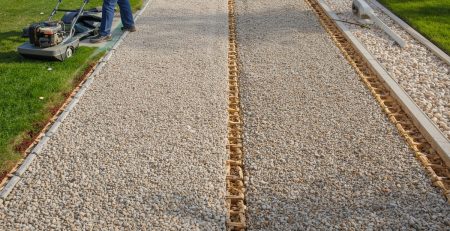
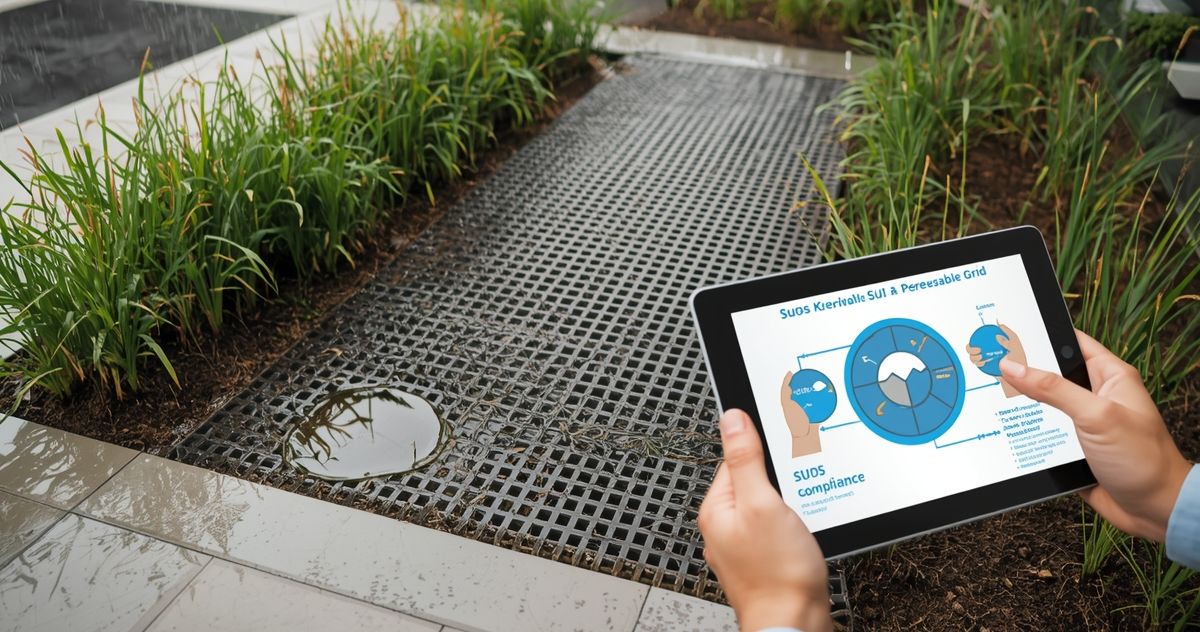
Permeable grids, such as gravel retention panels and grass support systems, create a stable surface that allows water to flow down into the ground rather than across it. This supports local drainage while preventing rutting, sinking and loose aggregate movement.
Key advantages include:
• A stable, slip-resistant surface
• Compatibility with grass, gravel or mixed finishes
• Reduced maintenance compared to loose stone
• Support for healthy soil structure and root development
• Long service life when installed with suitable geotextile layers
Growtivation’s Gravelrings and Grassrings systems are examples of grids designed for both pedestrian and vehicular use. Their designs support load distribution while keeping gravel or turf in place, which is important for long-term performance and appearance.
The Role of Geotextile Fabrics in Permeable Landscaping
Permeable grid systems rely on strong groundwork. This is where geotextile fabrics become essential. They help stabilise the soil, improve load distribution and prevent the mixing of sub-base materials with surrounding soil. Without this support, surfaces can fail long before their expected lifespan.
Growtivation produces several categories of geotextile fabrics, each suited to different needs within a SuDS-compliant installation.
Weed Control Fabrics
Products such as WEEDTEX and LANDTEX are designed to suppress weed growth without chemicals. They allow nutrients, water and air to pass through while blocking light to weed seeds. These fabrics are suitable for decorative borders, planting areas and non-trafficked landscaped spaces. They are often used alongside permeable grid systems when creating edging and surrounding features.
Woven Geo Fabrics for Stabilisation
GROUNDTEX is a tough woven geotextile that works for both heavy-duty weed suppression and ground stabilisation. It can sit beneath paths, patios or sub-base layers to create a more consistent and supportive ground structure. Its tear resistance makes it valuable in installations that involve gravel grids or heavy traffic.
Non-Woven Drainage Fabrics
DRAINTEX and DRIVETEX are non-woven fabrics with excellent permeability. They are widely used for French drains, soakaways and permeable paving bases. DRIVETEX, in particular, is suited to areas where vehicles will be present because it maintains strength underground and prevents sub-base contamination. This helps reduce rutting and preserves the integrity of the grid system.
Heavy Duty Geotextiles for Demanding Projects
EARTHWORX NW1000 is a robust fabric used in civil engineering, highways and other sites with high traffic or heavy loads. Although stronger than what most domestic projects require, it shows how advanced geotextile options can be when serious reinforcement is needed. This kind of fabric ensures that even in challenging environments, surface systems remain stable and durable.
How Permeable Grids and Geo Fabrics Work Together
A SuDS-compliant surface is successful when each layer performs its role effectively. Permeable grids provide structure at the top, while geotextile fabrics work below to keep everything stable and draining well.
A typical installation might include:
• A prepared sub-grade
• A non-woven geotextile like DRAINTEX or DRIVETEX for filtration
• A free-draining sub-base such as MOT Type 3
• A permeable grid system such as Gravelrings or Grassrings
• Finished gravel or turf placed into the grid
Each layer supports the one above it by controlling water flow, preventing material migration and spreading loads evenly. This combination helps maintain a safe and firm surface even during heavy rainfall or regular use.
Using Permeable Grids for Driveways
Driveways benefit greatly from permeable systems. Traditional paved driveways often cause runoff problems, especially during storms. Permeable grids allow water to pass through the surface and soak into the ground instead.
Gravelrings is one example of a grid system designed for driveways. Its cell structure locks gravel in place, stopping it from spreading or wearing thin. The integral mesh base helps prevent gravel from shifting underneath the panel. When paired with DRIVETEX, the risk of rutting is reduced because the sub-base stays separated and stable.
Homeowners appreciate these systems because they maintain a neat appearance and reduce the need for frequent top-ups or repairs.
Supporting Green Landscapes with Grass Grids
Grassrings offers a way to keep natural greenery while still creating a usable surface for vehicles or pedestrians. The panel prevents soil compaction, which helps grass roots stay healthy. It is suitable for overflow parking areas, garden access routes and recreation spaces.
When installed over a suitable geotextile and sub-base, grass grid systems and gravel grids for driveways help keep muddy areas under control and maintain a more consistent appearance year-round.
Installation Tips for Better Performance
To get the best results from a permeable grid system, preparation is essential. Contractors often follow the steps below to ensure a stable, long-lasting finish.
- Assess site levels to maintain natural water flow
• Excavate to a suitable depth for the chosen sub-base
• Install the correct geotextile fabric for drainage and stabilisation
• Compact sub-base layers evenly
• Ensure grids are clipped together and use pins to anchor grids into sub-base
• Fill grids completely and overfill gravel between 10-15mm
– Ensure top edge of grass grid slightly exposed
• Compact the gravel finish lightly to settle the surface
Using the appropriate fabrics can make a significant difference in how well the installation handles long term wear and varying weather conditions.
Why Quality Materials Matter
Growtivation focuses on producing reliable products supported by strong quality control. Their branding helps installers identify the right fabric for each application, which reduces errors on-site. Clear packaging, instructional materials and support resources also help users understand how to get the most from the products.
Because SuDS installations must perform well over many years, choosing fabrics and grid systems with proven performance is important. Poor quality materials may degrade, clog or tear, which can compromise the entire surface.
Looking Ahead at Sustainable Landscaping
As planning rules continue to favour drainage-friendly surfaces, demand for permeable systems will only increase. Permeable grids are becoming a standard option for modern landscaping because they combine practicality with environmental responsibility. When paired with geotextile fabrics that stabilise and protect the ground, they create a complete solution that supports both usability and sustainability.
Whether you are working on a domestic garden, a commercial site or a public space, investing in a proper SuDS-compliant foundation will provide long-term value. Permeable grids give property owners a way to manage water better while keeping surfaces attractive and functional.
If you are planning a project and want materials that perform well across a range of landscaping needs, Landscapes Direct offers access to quality products designed to work in real-world conditions. You can explore the full range and connect with experts who understand what different projects require.
For dependable, practical solutions that support sustainable landscaping, visit https://www.landscapes-direct.com/ and take the next step toward building smarter outdoor spaces.